

Quick answer
Hot air balloon safaris in the Maasai Mara launch between 06:00 and 06:30, fly for 60 to 90 minutes depending on wind, and cost $450 to $550 per person including hotel pickup, champagne breakfast, and a flight certificate. Weather cancellations occur in roughly 10 percent of bookings during the rainy season. The best wildlife viewing happens during the Great Migration months of July through October when wildebeest herds concentrate below flight paths.
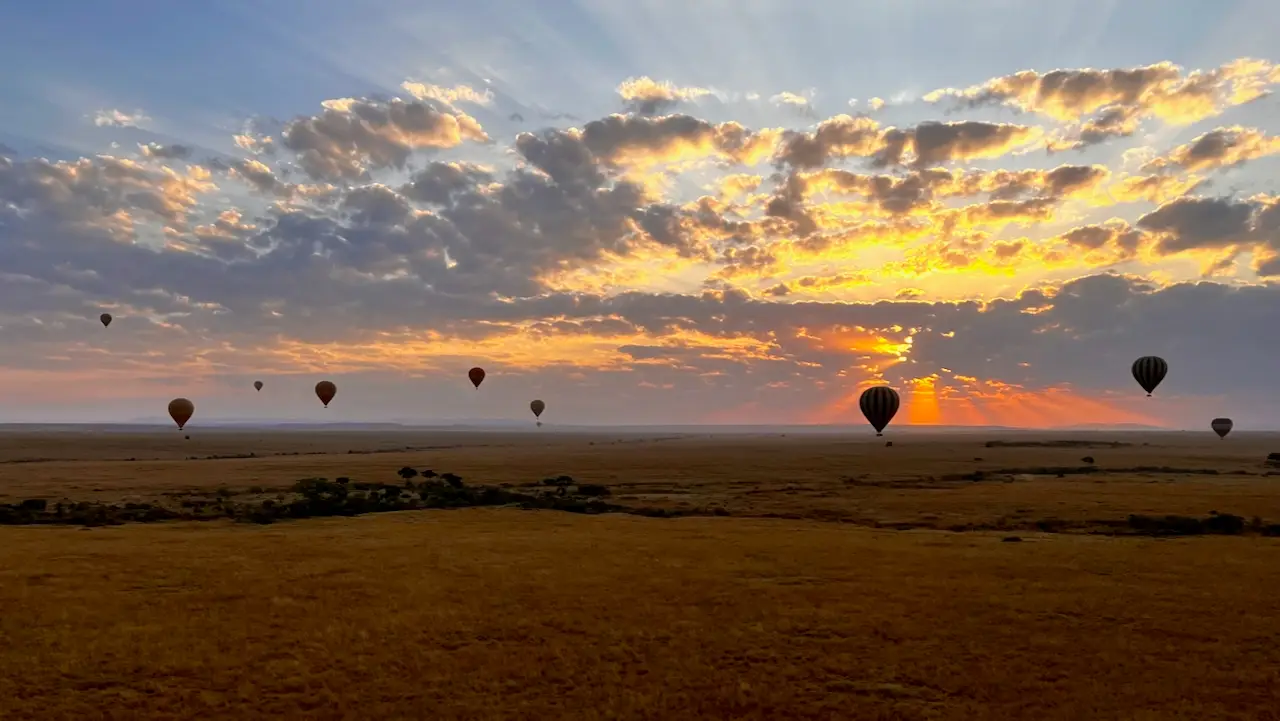
Balloon pilots in the Maasai Mara fly under Kenya Civil Aviation Authority regulation, and every licensed operator follows the same launch window: one hour after the reserve gates open at 06:00, when thermal currents are stable and wildlife activity peaks. The flight itself covers eight to twelve kilometers depending on prevailing wind, drifting southwest toward the Mara River or northeast across the Musiara Marsh. Altitude varies between 500 and 2,500 feet, low enough to distinguish individual animals but high enough to avoid disturbing them. This masai mara hot air balloon review consistently finds that the quality of your flight depends less on the operator's marketing than on three factors: your pilot's willingness to descend when game appears, the basket's passenger count (12 to 16 is standard, but smaller groups get better sightlines), and whether your launch date falls within the migration window. A July departure places you above 1.5 million wildebeest; a March flight shows resident giraffe, elephant, and plains game but no mega-herds. Both are valid experiences, but only one matches the imagery most travelers expect. The champagne breakfast follows immediately after landing, served under acacia trees at whichever point the wind deposited your basket. It is a full bush breakfast with hot food, not a mimosa-and-croissant formality, and it consumes 60 to 90 minutes of your morning. That timing matters: by the time you return to your lodge or rejoin your safari vehicle, it is often 10:00 or later, past the prime game-viewing hours your guide would have used for a traditional dawn drive. The tradeoff is explicit, and repeat visitors to the Mara often skip the balloon on their second or third trip in favor of uninterrupted ground time. Weather scrubs happen, especially during the long rains of April and May. Operators assess conditions at 05:00 on your flight morning and cancel if wind exceeds 12 knots or cloud cover sits below 1,500 feet. Most rebook you for the next available slot or issue a full refund, but if your Mara itinerary is only two nights, a cancellation can mean no second chance. The Mara balloon safari experience is weather-dependent in ways that a game drive is not, and that risk is part of what you pay for. Flight certificates are ceremonial, the champagne is Moët, and the sunrise over the escarpment is predictable. What is not predictable is the lion kill your pilot spots at 400 feet, or the cheetah coalition your basket drifts over at dawn.
“Altitude varies between 500 and 2,500 feet, low enough to distinguish individual animals but high enough to avoid disturbing them.”
Optimal Timing for a Masai Mara Hot Air Balloon Review
The most favorable period for a hot air balloon flight is during the Great Migration from July to October, when high concentrations of wildlife across the Mara plains provide the most active aerial viewing. Flights consistently launch in the pre-dawn darkness to capitalize on stable atmospheric conditions before temperatures rise.
July–October
Peak visitor volumeDry, 15°C to 28°C
This season aligns with the Great Migration, offering regular sightings of wildebeest and predators from above.
November–December
Moderate volumeShort rains, 16°C to 27°C
Vegetation turns green, attracting migratory birds and calving ungulates despite intermittent rainfall.
January–March
Lower volumeWarm, 17°C to 30°C
Clear skies and concentrated wildlife around permanent water sources make for consistent flight conditions.
April–June
Minimal volumeWet, 15°C to 25°C
Heavy rains may cause flight cancellations, though landscapes are lush and visitor numbers are at their lowest.
Verdict: The best window for a balloon safari is mid-August to September, when dry conditions and the peak of the Great Migration ensure maximum wildlife visibility.
How to Prepare for Your Masai Mara Hot Air Balloon Review Experience
A Masai Mara hot air balloon experience follows a structured sequence from pre-dawn pickup to a post-flight champagne breakfast, spanning approximately four hours total. Understanding each phase helps you pack appropriately and manage expectations for this early-morning adventure.
Confirm your pre-dawn pickup time
Most operators collect guests between 05:00 and 05:30 from lodges within the reserve. Verify your exact pickup time the evening before, as departure windows are tight and launch sites lie 30–45 minutes from most accommodations.
Arrive at the launch site
Vehicles deliver passengers to the inflation area while the crew prepares the balloon envelope. Expect uneven ground and bring a flashlight; the site has no permanent lighting, and you'll navigate by headlamp and vehicle beams.
Board the basket after inflation
Once the envelope is upright and heated, the pilot signals passengers to climb into the basket compartments. The basket rim sits waist-high; step onto the external footholds and swing your leg over—staff assist, but wear closed shoes with grip.
Fly for 60–90 minutes at dawn
The pilot launches shortly after 06:00 to catch optimal wind conditions and wildlife activity below. Flights drift with the wind rather than following a set route, so each trajectory differs based on that morning's conditions.
Land in an open clearing
The ground crew tracks the balloon by vehicle and sets up the landing zone. Landings involve a controlled descent into grassland; bend your knees and hold the basket handles as instructed, since touchdowns can be firm.
Join the bush breakfast setup
After landing, the crew unpacks tables, chairs, and a full breakfast spread in the field where you touched down. This celebratory meal typically includes eggs, sausages, pastries, fruits, coffee, and champagne, served under acacia shade.
Aerial Landmarks Observed in a Masai Mara Hot Air Balloon Review
Hot air balloon flights provide an elevated perspective of the Maasai Mara National Reserve, revealing landscape patterns and wildlife movements often obscured from the ground. These vantage points allow for the observation of geological features and water systems throughout the savanna.
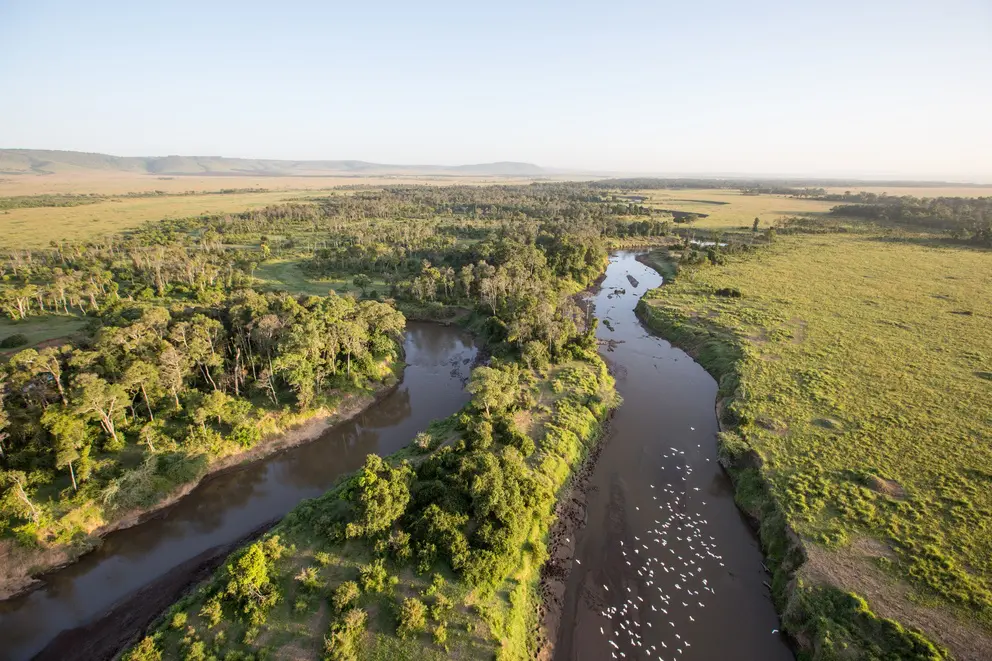
Mara River
The river winds through the reserve, creating critical water access points and forming the backdrop for crossing events. View the bends and riparian vegetation to spot crocodiles and hippos from above.
Follow the river's path to spot hidden riverbank wildlife.
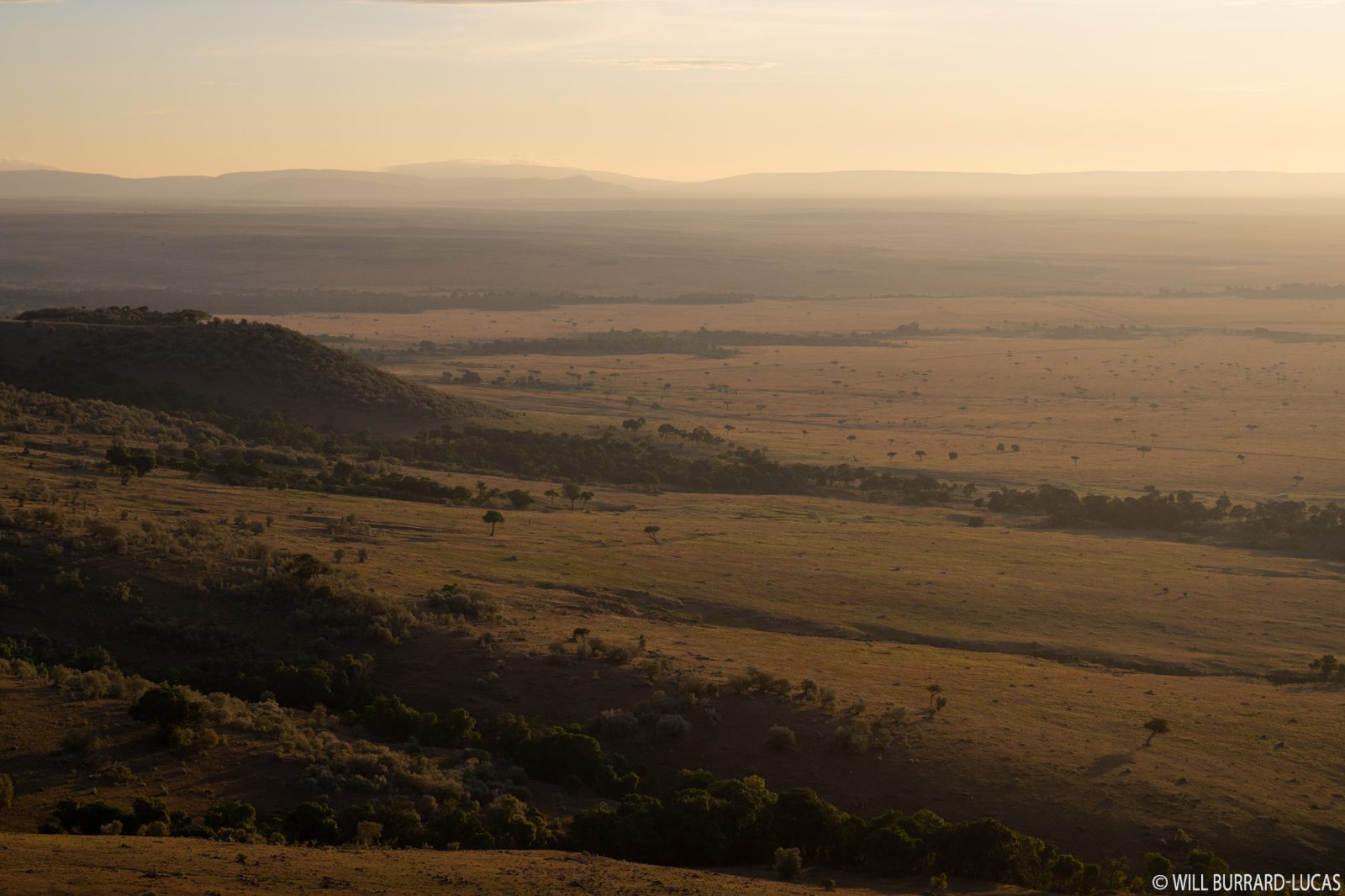
Oloololo Escarpment
This prominent geological formation marks the western boundary of the reserve and provides a distinct contrast to the plains. The elevation change creates unique thermal currents utilized by balloons.
Look for the shadow line where the escarpment meets the plains.
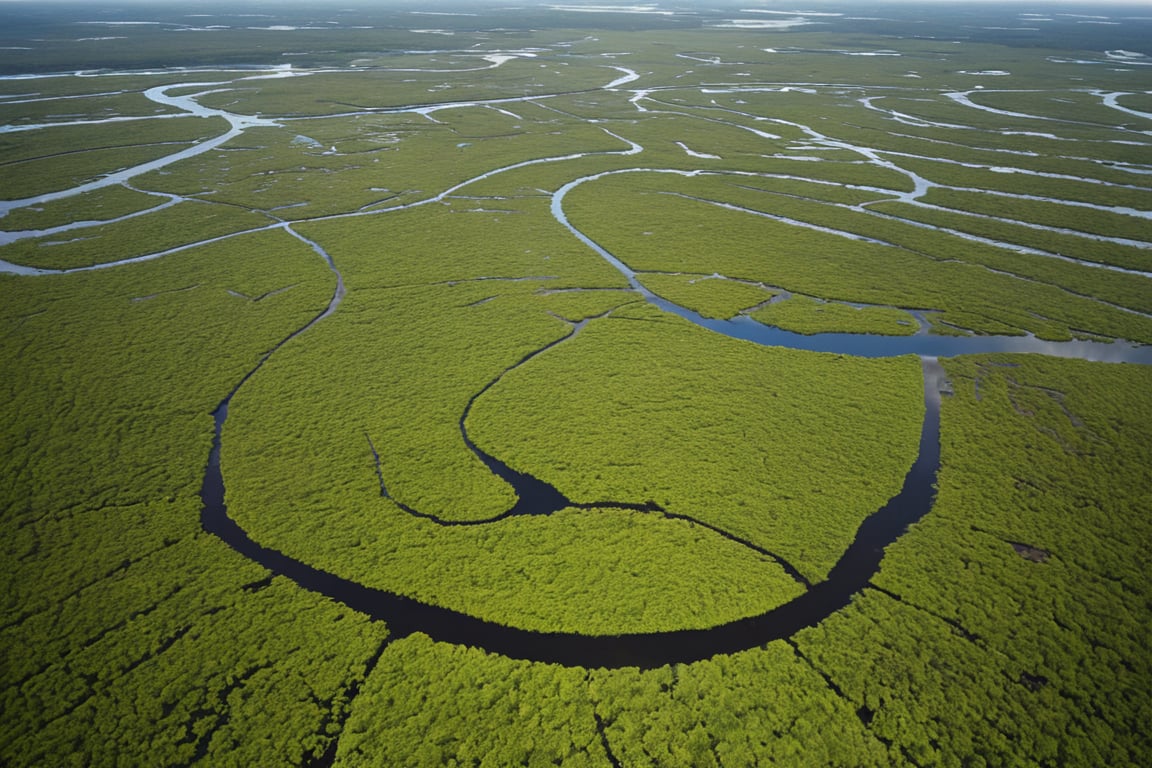
Musiara Swamp
A permanent water source that attracts large concentrations of game, especially during drier periods. The contrast of green vegetation against the surrounding grasslands is distinct from the air.
Focus on the perimeter to identify stalking predators.
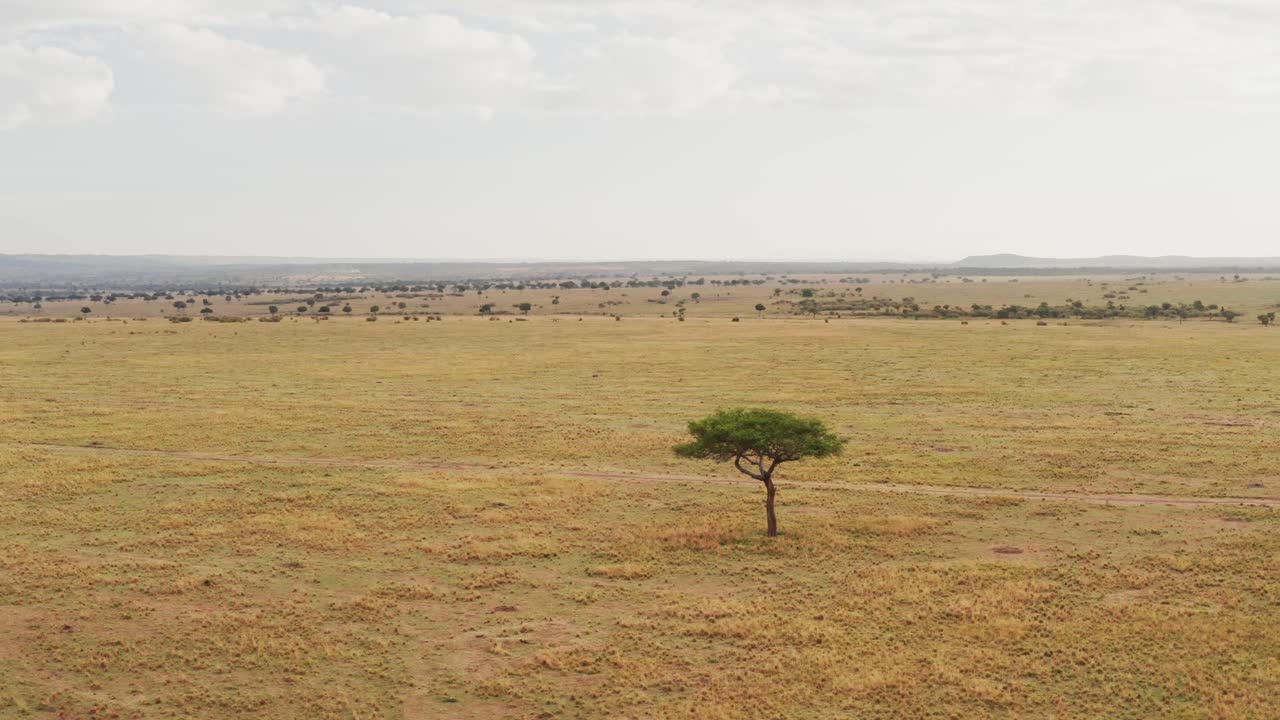
Savanna Grasslands
The vast, open plains constitute the primary ecosystem of the reserve, stretching toward the horizon. These areas allow observers to track the movement patterns of large herds.
Scan the horizon for migrating dust trails.
Practical Tips to Inform Your Masai Mara Hot Air Balloon Review
Prepare for your flight by focusing on technical comfort and equipment stability to ensure the best possible experience during your excursion.
Dress in synthetic layers
Temperatures drop significantly before sunrise and during the ascent, so wear moisture-wicking layers that you can easily remove as the morning warms up.
Bring beanies and gloves
The early morning air at high altitudes is cold, regardless of the heat from the balloon burners, and wind chill is common.
Stabilize camera equipment
Baskets can vibrate during flight and land with impact, so use a camera strap around your neck and avoid monopods or tripods which are difficult to manage in limited space.
Secure loose items
Loose hats, scarves, and equipment accessories can easily blow away or fall overboard; ensure all personal items are tethered or secured in zippered pockets.
Adhere to weight limits
Operators must balance the basket for safety; provide your accurate body weight when arranging your flight so the pilot can distribute passengers correctly for a stable ascent.
Test batteries beforehand
Cold air drains camera and phone batteries faster than expected, so keep your devices in an interior pocket close to your body heat until you are ready to record.
Maasai Mara National Reserve Official Opening Hours
The Maasai Mara National Reserve operates on a consistent daily schedule to accommodate visitors throughout the year.
| Monday | 06:00–18:00 | |
|---|---|---|
| Tuesday | 06:00–18:00 | |
| Wednesday | 06:00–18:00 | |
| Thursday | 06:00–18:00 | |
| Friday | 06:00–18:00 | |
| Saturday | 06:00–18:00 | |
| Sunday | 06:00–18:00 |
Check availability
Frequently asked questions about masai mara hot air balloon review
Everything you need to know about masai mara hot air balloon review